The Smart Building Blind Spot
Why Parking Data is the Missing Link in Building Intelligence
Walk into any modern building control room and you will see dashboards tracking energy usage, HVAC performance, occupancy levels and security events in real time. Everything measured. Everything optimised.
Or so it seems.
Because one or two levels below that control room sits one of the most heavily used parts of the asset, operating almost entirely blind: the car park.
This is one of the quieter contradictions in modern built environments. Above ground, building systems are increasingly intelligent. Below ground — where a significant portion of every working day begins and ends — there is little to no operational visibility. After seventeen years working across Australian built environments, it still surprises me how consistently this gap is accepted as normal.
Facilities and building managers are under growing pressure to demonstrate asset performance, improve tenant experience and reduce operational friction. Real-time parking data is the missing input in that equation — and the infrastructure to capture it now exists.
What is Smart Building Parking Data - and Why Does it Matter?
Smart building parking data refers to real-time sensor-based information about parking bay occupancy, access patterns, bay allocation compliance and utilisation trends — captured at the individual bay level and fed into a central management platform.
Unlike static car park management systems that rely on manual checks or entry/exit counts alone, a connected parking data platform provides granular, live visibility into how underground space is actually being used across the day, week and month.
For facilities managers, this translates directly into operational control: knowing which bays are occupied, which are being misused, which tenant allocations are sitting idle and how EV charging demand is shifting in real time. For asset owners and building managers, it provides the data layer needed to make evidence-based decisions about parking allocation, yield and building performance.

The Invisible Layer: How Much of a Building Sits Underground?
As cities densify, buildings are expected to do more with what already exists. The World Green Building Council estimates that up to 80% of the buildings that will exist in 2050 are already built — which places considerable pressure on existing assets to perform more efficiently, not just new ones.
A significant portion of those assets sits underground. In dense urban developments, basement levels can account for 25 to 40 percent of total built floor area, according to Arup's Cities Alive: Rethinking Cities Underground report. Yet these environments remain among the least connected and least instrumented within the asset.
The capital cost to construct these spaces is not low. Turner & Townsend and the RICS Global Construction Monitor consistently identify basement construction — excavation, structural reinforcement, waterproofing — as among the highest per-square-metre cost components in any commercial development. Once delivered, however, these areas generate disproportionately lower returns per square metre compared to habitable space above ground, with JLL and Colliers both noting that parking yields remain significantly below office or retail benchmarks when normalised to area.
This creates a persistent gap between where capital has been spent and where operational insight actually exists — making it harder for facilities and building managers to enhance performance across the underground stack.
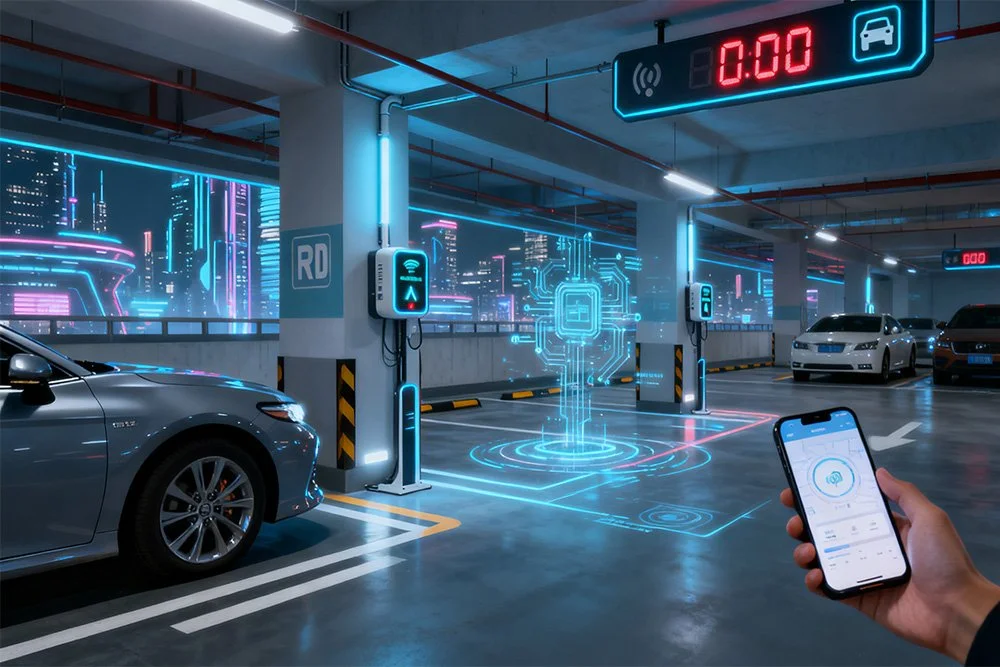
Connecting the basement is key to operational efficiency and optimisation of parking assets
Why has Parking Remained Disconnected from Building Intelligence?
The gap between above-ground building intelligence and below-ground invisibility persists for a technical reason that is rarely discussed openly: basements are genuinely difficult environments for connectivity.
Wi-Fi is unreliable below ground. Mobile coverage is inconsistent. Traditional IoT infrastructure often struggles to function in reinforced concrete environments where GPS signals are absent and radio frequency attenuation is high. The result is that underground spaces have remained disconnected from the data systems driving modern building performance — not because they lack importance, but because they have lacked the infrastructure to make them visible.
This is the real blind spot. Not a lack of interest in parking data, but an absence of the connectivity layer needed to capture it. Until that layer exists, basements remain what I call a digital desert beneath otherwise intelligent assets.
The platform behind Parking Spotz was engineered specifically to solve this problem — hardware designed to operate without Wi-Fi or consistent mobile coverage, because that was the barrier keeping underground spaces disconnected from building intelligence.
The Operational Cost of Parking Invisibility
The operational consequences of an unmonitored car park compound quietly but consistently across an asset's life.
Research into urban mobility — including Donald Shoup's landmark study The High Cost of Free Parking and analysis by McKinsey & Company — indicates that up to 30% of urban traffic in some cities is attributable to drivers searching for available parking. That inefficiency does not stop at the street. It flows directly into buildings, resulting in misused visitor bays, blocked EV charging spaces, underutilised allocations and daily friction between tenants, staff and visitors.
The issue is not that basements are low value. It is that they are under-instrumented and, as a result, unmanaged. Without visibility, facilities managers cannot enforce allocation, cannot optimise utilisation, and cannot demonstrate to asset owners and investors how the space is actually performing.
This affects every asset class: premium A-grade commercial buildings, residential towers, airports, hospitals, universities, schools, stadia and entertainment venues, and mixed-use developments. The car park is a universal building component — and universally underserved by operational data.
What Changes When Real-Time Parking Visibility Is Introduced
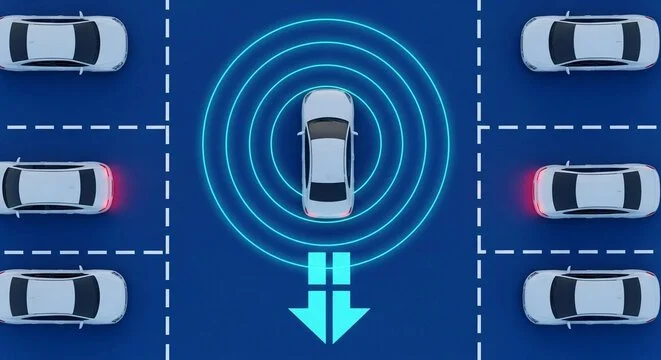
When real-time connectivity is introduced at bay level, the operational picture changes substantially and quickly.
Facilities managers can see, in real time, which bays are in use, which are being misused, and how demand shifts across the day and week. Parking can be reserved in advance, availability guaranteed for priority users, and turnover actively managed rather than passively assumed. Over time, this data builds a predictive layer — allowing teams to anticipate demand and align parking access with broader building operations.
Access control integrates with booking systems. Tenant services improve through guaranteed bay availability. EV charging access can be prioritised and enforced based on actual usage patterns rather than policy alone.
Deloitte has found that buildings integrating multiple operational data streams can improve overall efficiency by up to 30%. Parking data is the missing input in that equation. Without it, a critical layer of real-world building usage — how people arrive, when they arrive, and how they access the asset — remains entirely unaccounted for in the building's operational intelligence. Explore how this connects to GRESB and ESG reporting frameworks for commercial assets.
Reframing the Car Park: From Cost Centre to Strategic Asset Layer
Once visible, parking shifts from a static allocation problem to a dynamic operational system.
It becomes a lever for improving tenant experience and retention. A mechanism for increasing utilisation of existing capital infrastructure. A data source for planning, forecasting and demonstrating asset performance to owners and investors. And a foundation for emerging services — EV charging access management, shared mobility integration and flexible access models that reflect how buildings are actually used today.
The assets that will perform best over the next decade are those that can demonstrate they understand how people actually use them. Parking is the first data point in that story — it is where the building experience begins, before the lobby, before the lift. For a broader view of how connected underground infrastructure unlocks building performance, see our piece on why smart cities start underground.
Completing the Picture: Buildings Start at Arrival
The concept of a smart building is usually framed around what happens inside the structure — energy efficiency, air quality, occupant comfort. But buildings do not start at the lobby.
They start at arrival.
If that first experience is inefficient or unmanaged, it shapes how the entire asset is perceived and experienced. The next phase of building intelligence will not come from adding more sensors above ground. It will come from finally connecting what has long been disconnected below it.
Parking is a natural starting point — not because it is simple, but because it is universal, high-impact, and until now, largely invisible.
Parking Spotz brings real-time visibility and control to underground built environments — transforming the digital desert beneath buildings into intelligent, connected infrastructure. If you manage a commercial, residential or mixed-use asset and are ready to close the blind spot beneath your building, start the conversation with our team.
Read the article in FM Media below.
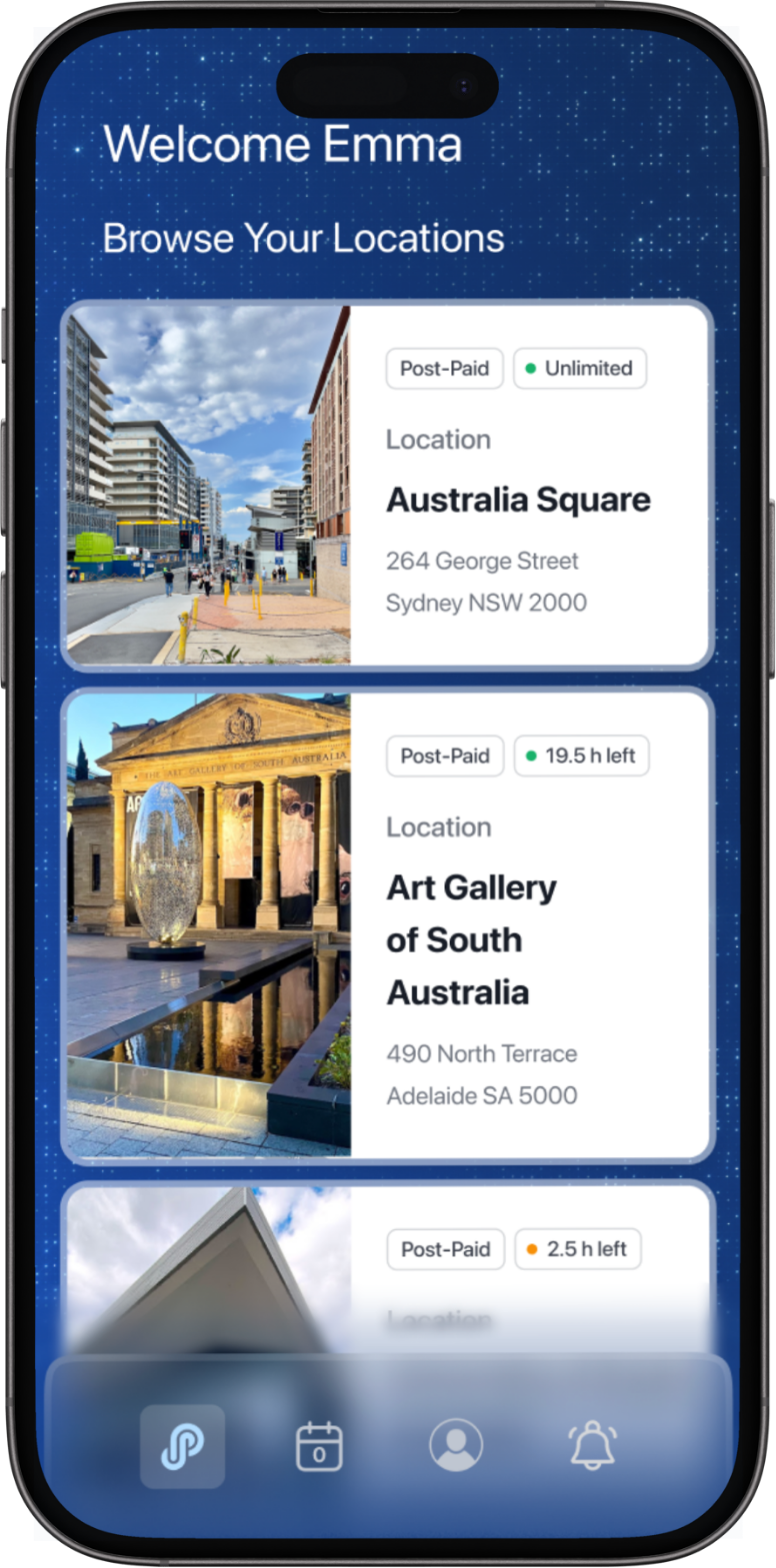
Book an EV Charging Bay with the Parking Spotz App
Frequently Asked Questions About Parking Data
What is smart building parking data?
Smart building parking data is real-time information about parking bay occupancy, access compliance, bay allocation and utilisation patterns, captured through IoT sensors at the individual bay level. It feeds into a central management platform, giving facilities managers live visibility into how underground space is being used — the same way energy or HVAC data informs above-ground building operations.
Why is parking data missing from most smart building platforms?
Most smart building platforms are designed for above-ground environments where Wi-Fi and cellular connectivity are reliable. Underground car parks present a fundamentally different connectivity challenge — reinforced concrete attenuates radio signals, GPS is absent and standard IoT infrastructure frequently fails. This has kept basement parking data out of building management systems for decades. Parking Spotz was built specifically to solve this underground connectivity gap.
How does real-time parking visibility improve facilities management?
Real-time parking visibility allows facilities managers to monitor bay occupancy live, enforce allocation rules, manage visitor access, prioritise EV charging bays and identify misuse as it happens rather than after the fact. Over time, the data builds a predictive layer that allows teams to anticipate demand and align parking operations with broader building activity — reducing tenant friction and improving overall asset efficiency.
What types of buildings benefit most from connected parking data?
Any building with an underground or basement car park benefits from connected parking data — including commercial office buildings, residential towers, hospitals, universities, airports, retail centres, stadia and mixed-use developments. The operational gains are highest in buildings where parking is shared between multiple user groups: tenants, visitors, staff, EV users and delivery vehicles.
How does parking data contribute to ESG and GRESB performance?
Parking data contributes to ESG performance in two key ways: it reduces vehicle circulation emissions by eliminating unnecessary searching and idling within the asset, and it provides the utilisation evidence needed to benchmark and report on space efficiency. For assets seeking GRESB ratings, demonstrating operational data coverage across all building layers — including underground — strengthens the overall sustainability and governance score.
What is the ROI of introducing smart parking data to a commercial building?
Return on investment from smart parking data comes from several directions simultaneously: reduced misuse and the associated administrative overhead, improved tenant satisfaction and retention, optimised EV charging access which reduces disputes, and the ability to demonstrate asset performance to owners and investors through data rather than estimation. Deloitte research indicates buildings integrating multiple operational data streams can improve overall operational efficiency by up to 30% — parking data is a foundational input in that figure.
How does Parking Spotz work in underground environments without Wi-Fi?
Parking Spotz uses low-power hardware and an intelligent gateway architecture specifically designed for dense, signal-hostile underground environments. Rather than relying on Wi-Fi or mobile coverage — which are unreliable in reinforced concrete basements — the platform uses a signal-tolerant communications architecture that operates reliably at bay level, feeding real-time occupancy and access data to the management platform regardless of above-ground network conditions.
Ready to Access Smart Parking Data from your Building Basement?
Parking Spotz brings real-time visibility and control to underground built environments — transforming the digital desert beneath buildings into intelligent, connected infrastructure. If you manage a commercial, residential or mixed-use asset and are ready to close the blind spot beneath your building, start the conversation with our team.