Smart parking first: The best buildings start with getting the basement right.

In most buildings, parking is treated as a secondary consideration — something resolved early in the design phase and rarely revisited. Parking spots are allocated, signage is installed, and the basement is effectively “set and forgotten.”
Yet for residents, tenants, visitors, and staff, the car park is often the first point of interaction with a building. The experience people have underground directly shapes how they perceive the building as a whole.
As Australian developments become increasingly dense and mixed-use, parking is no longer a passive utility. It plays a critical role in operational efficiency, user experience, sustainability outcomes, and long-term asset performance. When parking is poorly managed or disconnected from broader building systems, it can undermine even the most well-designed development.
In the January 2026 edition of Build Australia, Angelique Mentis, Founder and CEO of Parking Spotz, provides insight as to how buildings can unlock core value by optimising parking experience, usage and ROI.
The changing role of parking in modern buildings
Historically, parking was designed for predictable, static use. Residential buildings had resident and visitor bays. Commercial buildings catered for office hours. Retail sites planned for turnover during trading times.
That model no longer reflects how buildings operate today.
Mixed-use developments now combine residential, commercial offices, retail precincts, hospitals, universities, hotels and hospitality uses within the same footprint. Usage patterns shift throughout the day and week. Electric vehicle adoption introduces new access requirements. Sustainability targets place pressure on reducing unnecessary traffic and vehicle movement and improving utilisation of existing infrastructure.
In this environment, static parking rules quickly become ineffective. Common issues emerge:
Commercial tenants compete with residents during peak hours
Visitor bays are occupied by long-term users
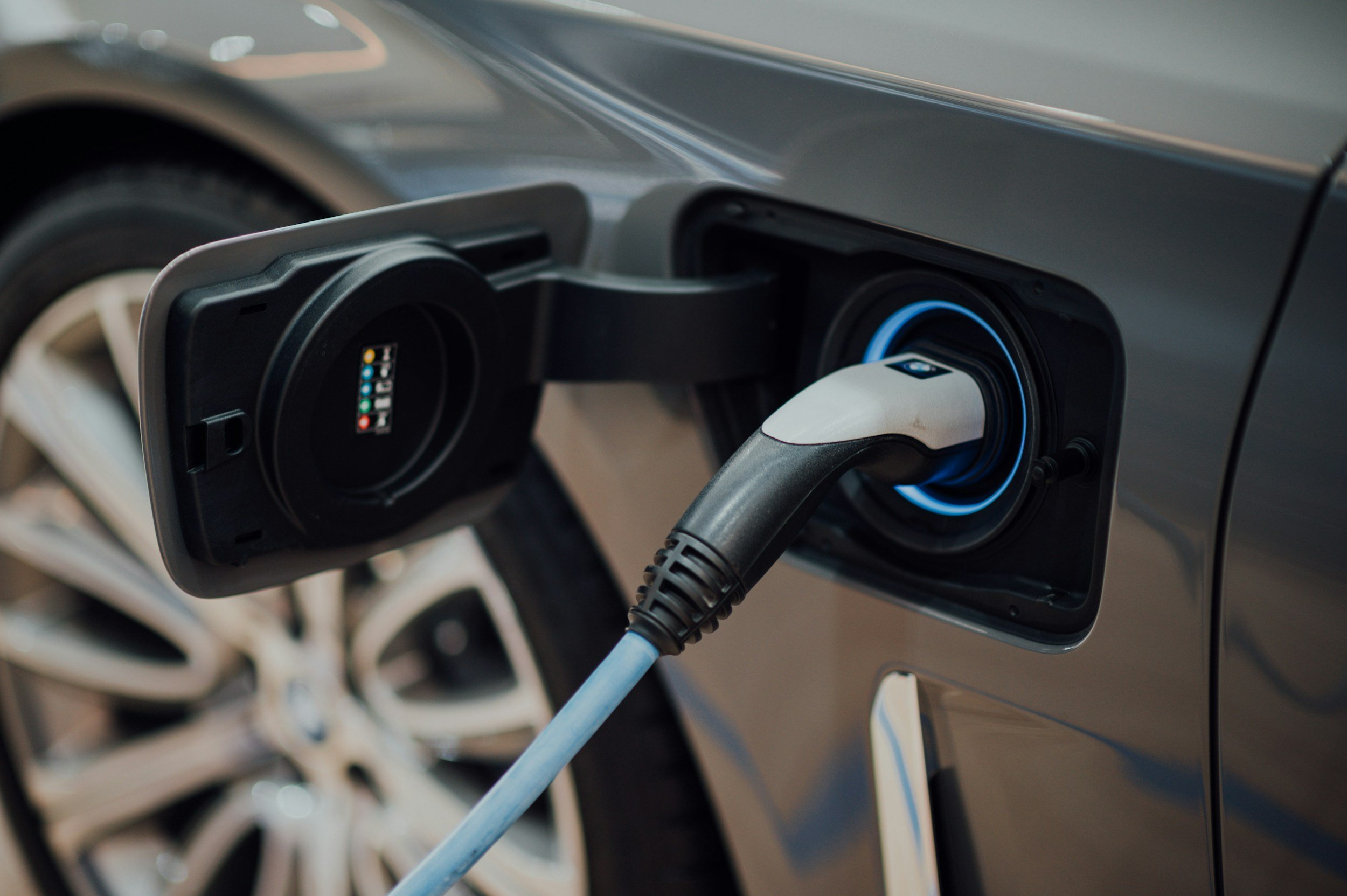
EV charging bays are blocked by non-EV vehicles
Facilities teams spend increasing time resolving parking complaints
These challenges are not unique to any one building type. They are a direct result of parking systems that have not evolved alongside the buildings they serve.
Why parking problems persist
In many cases, parking issues are treated as behavioural problems rather than system limitations. Additional signage is installed. Notices are sent. Enforcement is increased.
While these measures may provide short-term relief, they rarely address the underlying issue: a lack of control, visibility, and adaptability.
Traditional parking infrastructure offers limited flexibility once constructed. Making changes often requires physical modifications, additional cabling, or significant cost. As a result, parking remains disconnected from real-world usage patterns and changing demands.
This disconnect places ongoing pressure on facilities managers and building owners while diminishing the day-to-day experience of users and negatively impacting building reputation and return on investment.
The shift toward smart and adaptive parking
Smart parking introduces a different approach. Instead of relying on static rules, it allows parking to respond dynamically to demand.
When parking is designed to be smart from the outset, buildings gain the ability to:
Adjust access based on time of day or user group
Protect priority bay types such as loading dock, EV charging and disability/accessible spaces
Improve utilisation of existing parking stock
Reduce vehicle circulation within basements searching for parking
Provide real-time visibility to building managers
This adaptability enables buildings to operate more efficiently without altering their physical structure. Changes can be made through software rather than construction, allowing parking to evolve alongside the building.
Operational and sustainability implications
Basement parking represents a significant investment in any development. Improving how that space is used has direct financial and environmental implications.
From an operational perspective, smart parking reduces manual intervention and administrative overhead. Facilities teams spend less time managing disputes, monitoring misuse, or responding to complaints.
From a sustainability perspective, smarter parking contributes to:
Reduced emissions caused by vehicles searching for spaces
Improved utilisation of existing infrastructure
Avoidance of unnecessary new parking construction
Support for NABERS, Green Star, and broader ESG objectives
As sustainability reporting becomes more central to asset performance, parking efficiency is increasingly relevant.
Designing smart parking for underground environments
Despite growing interest in smart parking, many systems are poorly suited to the digital deserts of underground basements. Reliance on Wi-Fi, mobile networks, or extensive cabling often results in unreliable performance and costly retrofits.
Parking Spotz was developed specifically for underground environments, where connectivity and power access are limited.
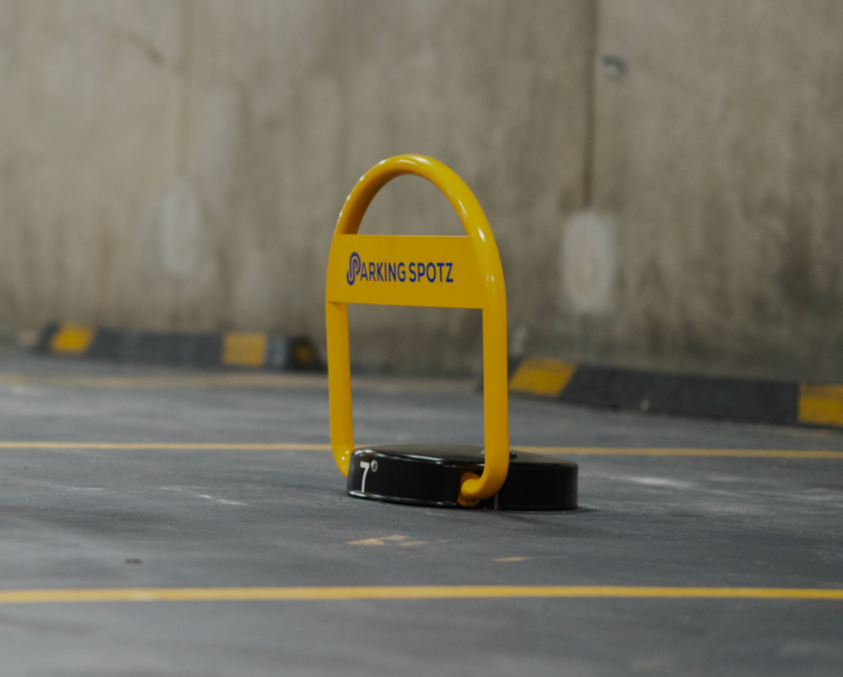
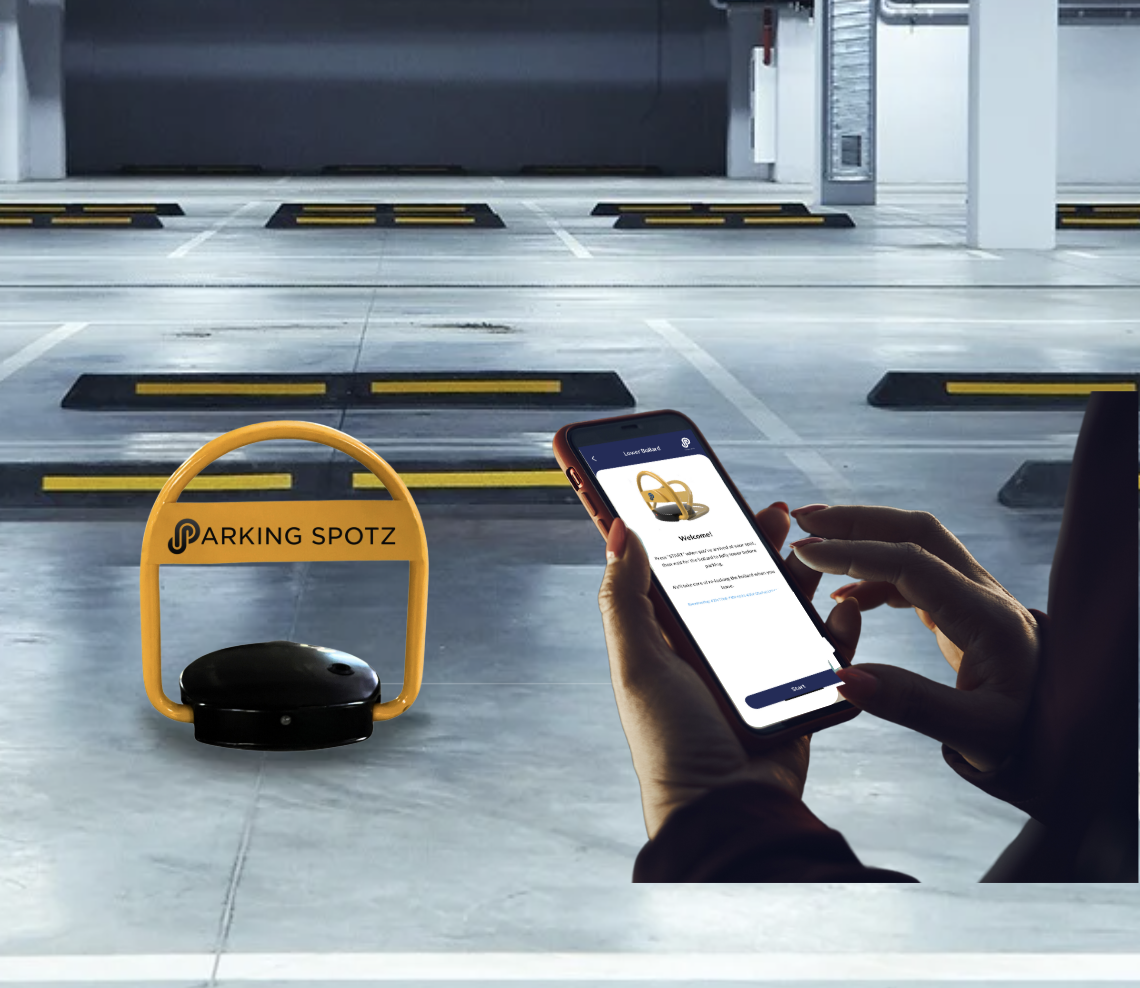
Smart bollards that physically secure individual bays
An intuitive driver app that automates permissioning and booking access
A real-time administrative portal for monitoring and management
A wireless infrastructure backbone that operates without requiring Wi-Fi, mobile signal, or hardwired power
Because the system is surface-mounted and compliant with the Building Code of Australia, it is easily installed in both new developments and retrofitted for existing buildings without any need for trenching or structural disruption.
Smart parking at precinct scale
The benefits of adaptive parking become particularly clear in mixed-use and precinct-scale developments, where parking demand varies significantly throughout the day. Bay types, rule types, permissioning, pricing, can all be adjusted dynamically and remotely by software alone. And the smart bollards respond immediately.
By enabling parking rules to change dynamically, buildings can transition seamlessly between office, retail, and residential use without conflict.
This flexibility allows asset owners to extract greater value from existing parking infrastructure while delivering a more consistent experience for all users.
Rethinking parking as core infrastructure
As buildings continue to evolve, parking can no longer be treated as a static utility. It is a core operational system that influences accessibility, sustainability, and user satisfaction.
A parking-first approach does not mean prioritising cars over people. It means recognising that access and movement are fundamental to how buildings function.
By getting the basement right, developers and asset owners set the foundation for buildings that operate more smoothly, adapt more easily, and perform better over time.
Read the article online in Build Australia here.

Smart Parking First: Getting the Basement Right. Build Australia January 2026 Angelique Mentis